
Our cats to sponsor
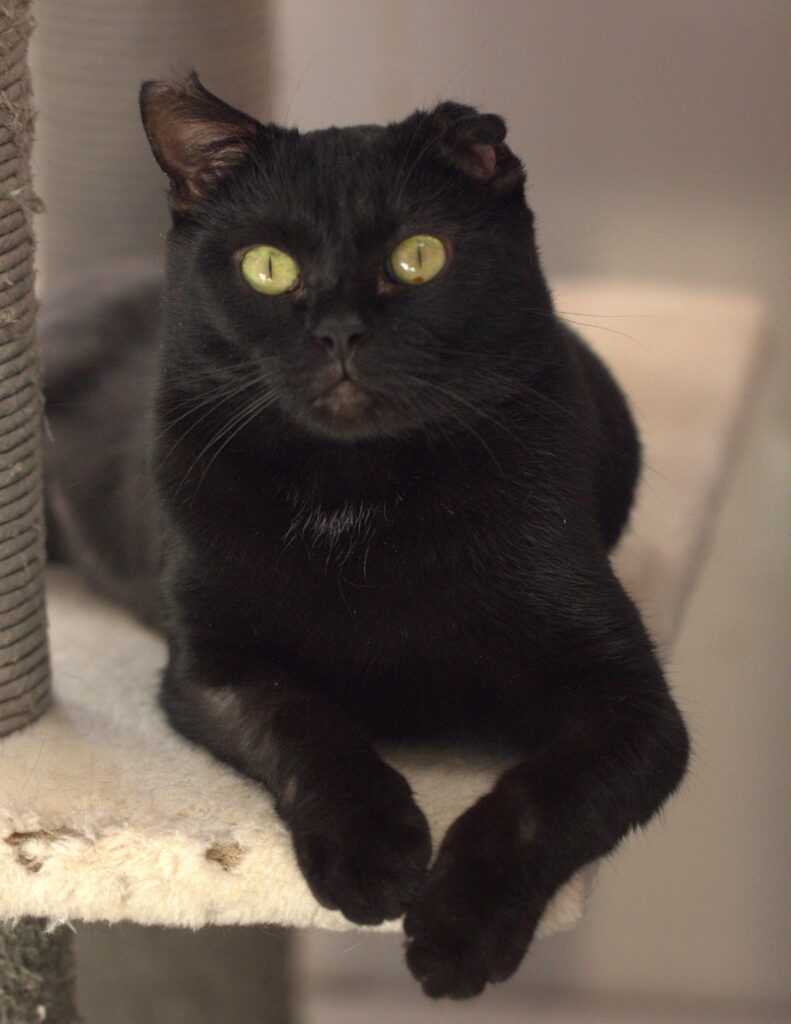
Gamine
Gamine is a tiny, very endearing cat. She is about two years old. Her little body bears the scars of a very difficult start in life. When she arrived at our shelter, her ears were infected and frostbitten. The tip of one of her hind legs was bleeding, and she couldn’t put one of her front legs on the ground.
She saw veterinarians many times during the first few months. She underwent aggressive antibiotic treatment to save her injured hind leg. As for her front leg, which is clearly not well, it was fractured a long time ago. The bones healed as best they could. According to the vet, someone shot her with a pellet gun because she has metal debris in her leg. We consulted a surgeon to find out if it was possible to remove the lead fragments. According to the surgeon, attempting surgery to remove the pieces of metal could do more harm than good because the area where the largest piece is lodged is very small, leaving little room for the surgeon to maneuver, and the end result would not help Gamine’s mobility issues. The three veterinarians consulted about her legs are unanimous. Her hind legs have joint abnormalities that are well established and therefore untreatable. Her hind leg problems are a consequence of the deformity of her front leg. There is compensation in the hind legs to help her front leg. The only thing we can do is give Gamine Flexadin to prevent osteoarthritis in her legs.
As problems never come alone, our little Gamine has now developed allergies. We don’t yet know if they are food-related or environmental. We are currently trying to confirm whether it is a food allergy. She is therefore on a very strict diet with hypoallergenic food containing hydrolyzed proteins.
We have enrolled Gamine in a sponsorship program because she needs frequent visits to the vet to make sure everything continues to go well for her. She also needs to be monitored by a dermatologist for her allergy problems.
Help us by sponsoring a cat
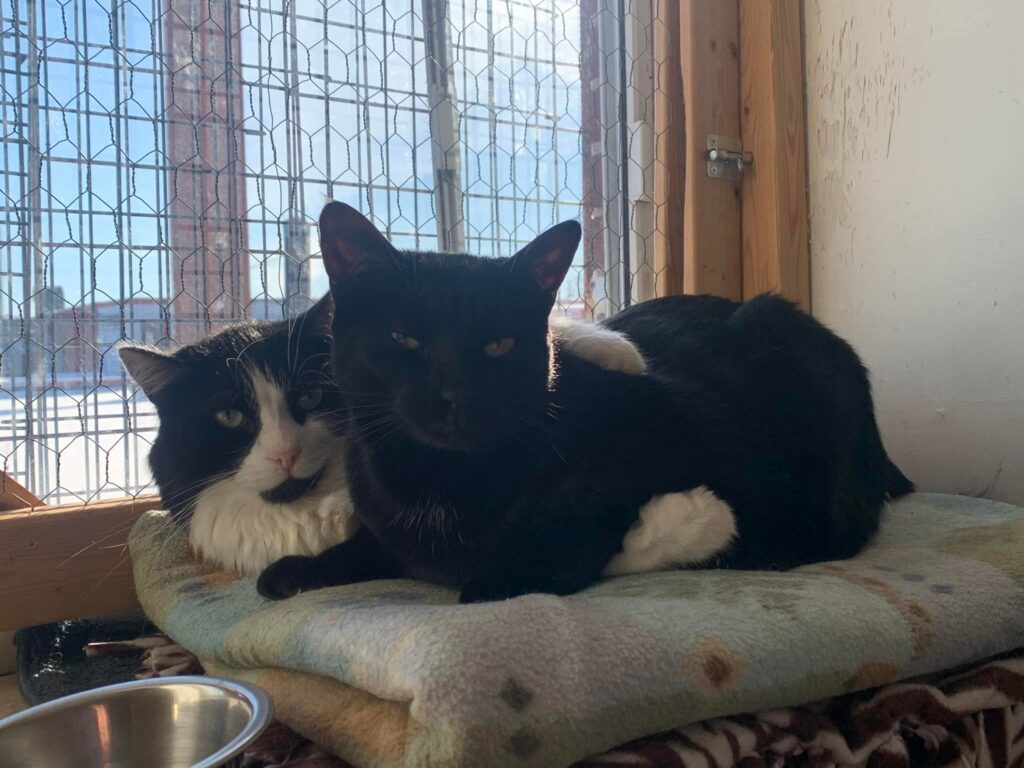
Byba
Byba is a black and white cat that arrived at the shelter as a kitten at only 8 months old. He was already suffering from dental pain. In an effort to address his stomatitis, he underwent a complete dental extraction before he turned one. The stomatitis improved for a while after the procedure, but it has intensified again in the last 18 months. We’ve taken him to the vet multiple times, and although he received therapeutic laser treatment to alleviate inflammation, nothing provides long-term relief. It’s now necessary to put him on permanent medication so he can finally enjoy life pain-free. However, this treatment is expensive.
So, what is stomatitis? It’s an autoimmune disease that affects a cat’s gums and oral mucosa, causing them to become bright red and severely inflamed. In the most severe cases, the pain can be so overwhelming that the cat cannot eat. For Byba, during the worst phases of his condition, his gums become so inflamed that they bleed upon contact.
Byba is a lovely, shy cat. It’s easy to see how living with constant pain hinders his ability to socialize. Fortunately, he has some feline friends who are always eager to cuddle with him.
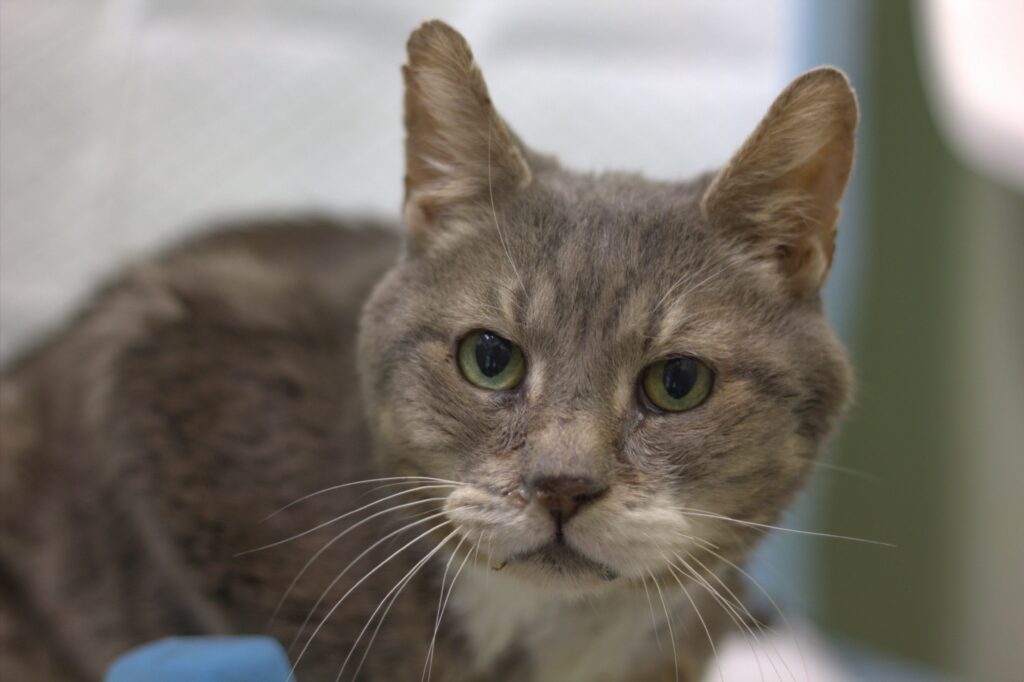
Dalgi
Just a few months ago, Dalgi lived with six other cats and the person who cared for them. Then, in the span of only 24 hours, everything changed. His owner was rushed to the hospital and sadly passed away the following day.
For some time, declining health had made it impossible for Dalgi’s owner to provide the care the cats desperately needed. Out of respect for his memory, we will not share the details of their living conditions. What matters is that when we found Dalgi, it was immediately clear that he had endured very difficult circumstances and urgently needed help, just like his feline companions.
We were able to take in two of the six cats. Gyul, who was in relatively good health, quickly found a loving forever home. Dalgi’s journey, however, would be much longer.
When he arrived at the shelter, Dalgi was severely dehydrated and required several days of hospitalization. He was suffering from explosive diarrhea caused by chronic inflammatory bowel disease. After weeks of trial and error, we finally found the treatment that worked: a very strict prescription diet combined with daily budesonide. Thanks to this treatment, his condition is now well controlled, and he is finally able to enjoy a much better quality of life.
Unfortunately, that’s not his only medical challenge. Dalgi also has a significant heart murmur that requires regular monitoring, although his heart thankfully shows no structural changes at this time. In addition, he suffers from a herniated disc that can sometimes interfere with his ability to urinate properly, making ongoing veterinary follow- up essential.
Despite everything he has been through, Dalgi is an incredibly gentle and resilient cat. He has never stopped trusting people, and today he enjoys every warm bed, every good meal, every gentle touch, and every moment of comfort that comes his way.
To keep him healthy, Dalgi will need lifelong specialized food, daily medication, and regular veterinary care. By sponsoring Dalgi, you are giving him much more than medical treatment. You are giving him the security he once lost, the promise that he will never go without the care he depends on, and the chance to spend the rest of his life surrounded by warmth, kindness, and love.
After such a difficult beginning, Dalgi finally has hope for a brighter future. With your support, we can make sure that future becomes his reality.
Ozzy
Ozzy is a beautiful 4-year-old gray and white cat who was found wandering around Rivière-Des-Prairies. When he arrived at our shelter, Ozzy had persistent diarrhea. We consulted with veterinarians repeatedly to resolve this issue. We had no idea that this problem was not actually a problem after all, because his diarrhea had kept him alive…
Let us explain… After much effort, we finally stopped Ozzy’s diarrhea, but then he became constipated. No laxative could relieve his constipation. We consulted the vet again, who gave him an enema, but the constipation persisted. Two days later, we took him to the emergency room, where he remained hospitalized for five days without the vets being able to relieve the intestinal obstruction. Ozzy was transferred to our regular veterinary clinic, where, as a last resort, he underwent surgery to relieve the intestinal obstruction. This operation was really Ozzy’s last chance. If it didn’t work, he would have had to be euthanized. That would have been heartbreaking because Ozzy is absolutely adorable!
What caused this? During his numerous examinations, veterinarians discovered that Ozzy has a narrowing of the pelvic canal, which means that the opening for passing stool is narrower than in other cats. In all likelihood, the narrowing is due to an old fracture that caused misalignment when the bones healed. Unfortunately for him, his problem is mechanical and cannot be corrected with surgery. We don’t really like cats to have diarrhea or loose stools, but in Ozzy’s case, it’s a matter of life and death: his stools must remain loose or diarrhea-like to prevent another blockage. Ozzy must take medication to increase his intestinal motility three times a day for the rest of his life, in addition to a laxative. He is on a special fiber-free gastrointestinal diet for life. In his case, fiber is not recommended because it increases stool volume.
We have enrolled Ozzy in our sponsorship program because he needs frequent veterinary visits to ensure that everything continues to go well for him. Ozzy is an adorable cat who particularly enjoys the company of humans. He lives in a condo at the shelter, but he is allowed to roam the hallway among the volunteers. When he goes out, he takes the opportunity to bask in the sun on the kitchen windowsill. This also allows him to supervise the volunteers’ work.

Help us by sponsoring a cat

Mystery cat
The sponsorship program was established to support the veterinary expenses of cats with chronic illnesses and lower chances of adoption. For those of you who cannot choose from our adorable residents, the Mystery Cat is here for you.
If you decide to sponsor the mystery cat, you will receive updates and photos of a cat rescued from the shelter whose health condition requires significant veterinary care. You can follow its progress until complete recovery. Once healed, a new cat will take over as the mystery cat.